
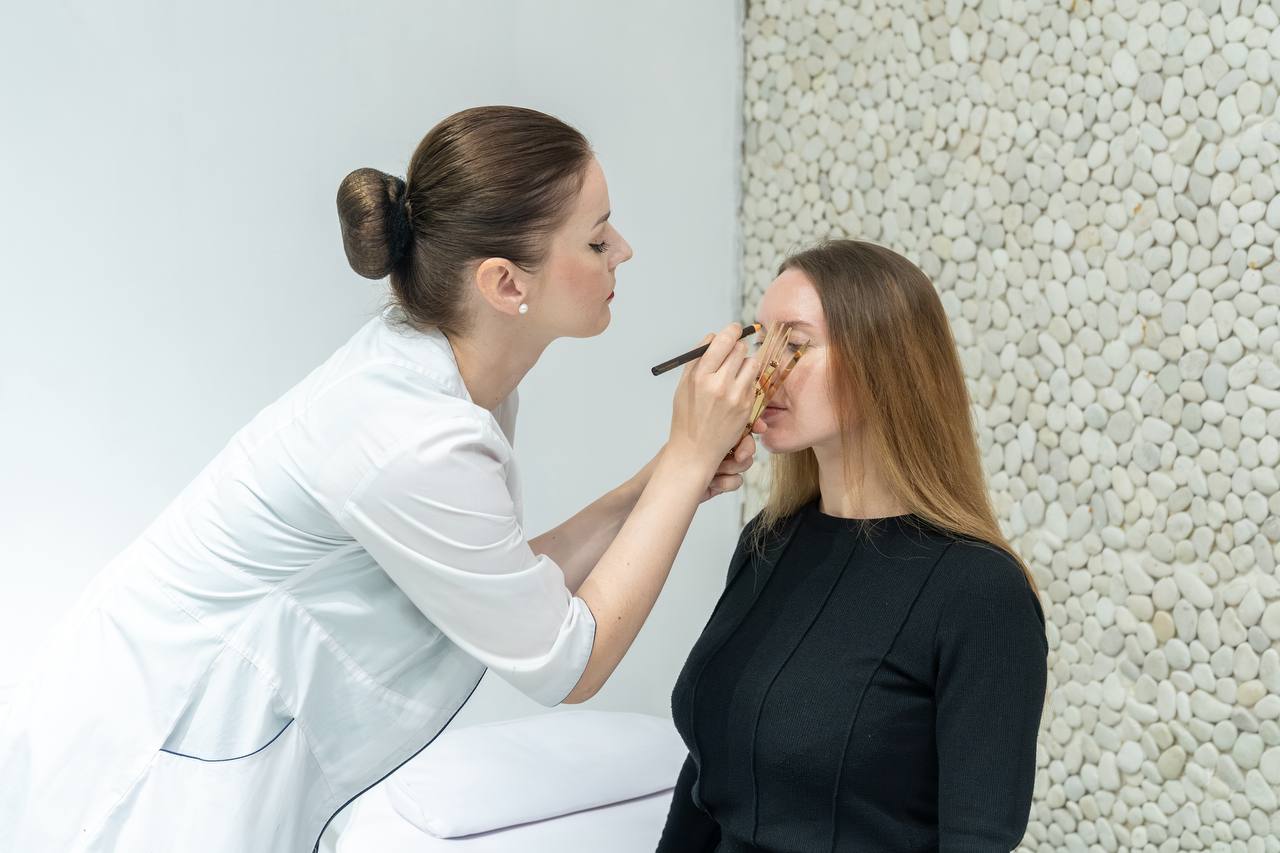
Basic esthetics training teaches you to give a competent facial and remove hair safely. An advanced esthetics program is aimed at what comes after that: stronger chemical exfoliation, device-based treatments, and the clinical judgment required to work on compromised or reactive skin without causing damage.
Not every state recognizes "advanced esthetics" as a formal licensing tier. A handful — Washington, Utah, and Virginia among them — issue a master esthetician credential with its own hour requirement and exam. Elsewhere, advanced training exists as post-licensure education rather than as a separate license, and what you are permitted to actually perform depends on your state's scope of practice rather than on the course completion certificate.
Check that first. It determines whether an advanced esthetics course expands your legal scope or simply your skill set.
Chemical exfoliation beyond the entry level
Basic programs cover superficial peels. Advanced coursework moves into higher concentrations and multi-acid formulations, and shifts the emphasis from application technique to assessment:
- Reading skin thickness, sensitivity, and barrier condition before selecting an agent
- Fitzpatrick typing and the elevated risk of post-inflammatory hyperpigmentation in deeper skin tones
- Layering protocols and endpoint recognition — knowing when to stop rather than following a timer
- Managing an adverse reaction, which is the part students most often feel unprepared for
Devices and modalities
The equipment portion is usually the reason people enroll. Coverage typically includes:
Microdermabrasion and hydradermabrasion — mechanical exfoliation, tip selection, pressure and pass discipline.
Microcurrent — low-level current for muscle re-education, along with the contraindications that rule out a meaningful share of clients.
LED therapy — wavelength selection and realistic expectations for what photobiomodulation delivers.
Dermaplaning — blade handling on a stretched skin surface, and the sanitation requirements that come with a sharp.
Ultrasonic and radiofrequency — where permitted, and often only under specific conditions.
Lasers, IPL, and microneedling deserve separate mention. In many states these are restricted to medical settings, require physician supervision, or fall outside esthetician scope entirely regardless of training. A course may teach them without your being licensed to perform them where you live.
Advanced skin analysis
Underpinning all of it is assessment. Advanced programs spend real time on histology, wound healing, inflammatory conditions, and the medication interactions that change what is safe — isotretinoin history, photosensitizing prescriptions, autoimmune conditions, recent injectables.
The practical outcome of this coursework is a longer list of clients you decline to treat, or refer out, than you had before.
Clinical and post-procedure work
Programs oriented toward medical spa employment add pre- and post-procedure protocols: preparing skin ahead of an injectable or laser appointment, managing recovery afterward, documenting treatments, and communicating within a clinical team. Charting and consent documentation feature more heavily here than in spa-focused training.
Judging a program before enrolling
Ask how many hours are hands-on versus lecture, how many students share each device, and whether you will work on live models or only mannequins. Device training without adequate live practice produces graduates who own a certificate and still hesitate at the machine. Ask also which specific modalities are covered, and cross-reference that list against what your state actually permits an esthetician to perform.