
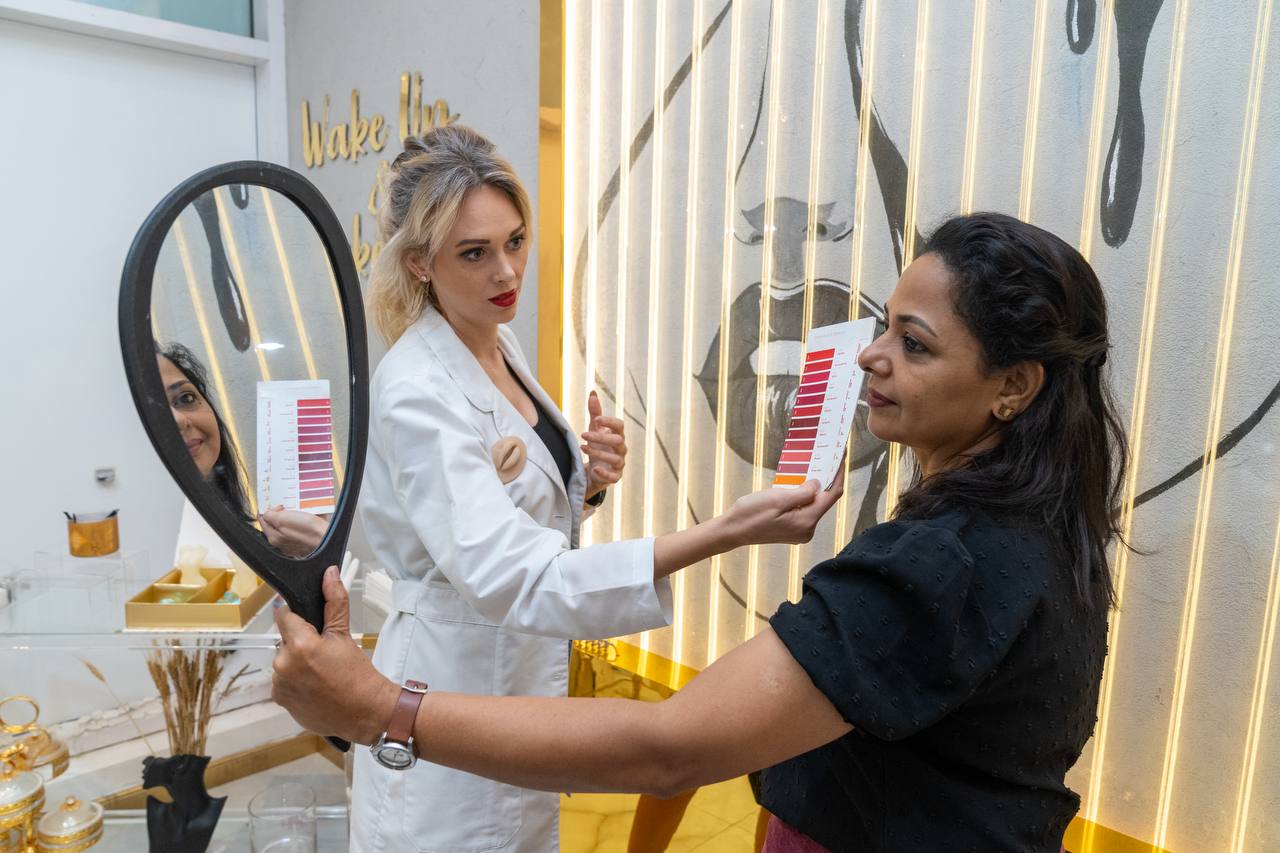
Two separate problems, usually treated as one. Certification is a defined process with a clear endpoint. Building a client base is slower, less structured, and the reason most newly trained artists stall.
The certification side
Confirm what your jurisdiction requires first. Because PMU is generally regulated as tattooing rather than as a cosmetology service, the authority is often a health department rather than a beauty board. Depending on location you may need a body art practitioner license, a tattoo permit, an existing esthetician or cosmetology license, documented apprenticeship hours, or some combination. County requirements can sit on top of state ones.
Complete bloodborne pathogen certification. Required almost everywhere, expected by insurers, and typically renewed annually.
Complete a foundational permanent make up course with substantial supervised live-model work. The completion certificate is what you present to a licensing authority, an insurer, or a landlord — but note that it is a training record, not a license.
Secure liability insurance before your first paying client. Standard beauty policies frequently exclude tattooing. Confirm your policy names PMU specifically.
Handle premises requirements. Many jurisdictions inspect and permit the physical space separately from the practitioner. If you plan to rent a room, verify the facility already holds whatever permit applies.
Where an existing esthetician certificate helps
If you already hold esthetics training, several things become easier. Some states will accept an esthetician license as part of the PMU pathway. Your existing knowledge of skin anatomy, contraindications, and sanitation transfers directly. And practically, you likely already have clients — people who trust you, whose skin you have worked on, and who represent the easiest first bookings you will ever get.
Adding PMU to an existing esthetics practice is a substantially shorter route to a full schedule than starting from nothing.
Building the client base
The model phase is not optional. Expect to work through a stretch of heavily discounted or free sessions to build a portfolio. Be transparent that you are newly trained — most people accepting a model rate understand the trade, and the ones who do not should not be your models.
Photograph healed results, not fresh work. This is the difference between a portfolio that books clients and one that does not. Fresh brows look impressive and prove nothing. Bring models back at four to eight weeks, photograph in consistent lighting, and show the healed and retouched outcome. Clients comparing artists learn to look for this.
Document consistently. Same lighting, same angles, before and after. An inconsistent gallery reads as an inconsistent artist even when the work is good.
Work in one direction first. Artists who launch offering brows, lips, liner, and correction simultaneously tend to be mediocre at all four. Building a reputation for one technique produces referrals faster, and referrals are the mechanism that eventually fills a book.
Ask for referrals directly. A satisfied client at their retouch appointment is the single best moment to ask. Most artists never do.
Set retouch expectations at consultation. Explaining fading and the retouch schedule up front prevents the disappointed client at month eighteen who believed the work was permanent. That conversation, documented, protects both the relationship and you.
A realistic timeline
Certification can be completed in weeks. A schedule that supports you generally takes considerably longer — commonly a year or more of model work, healed documentation, and referral accumulation.
The artists who get there are usually not the most talented ones. They are the ones who kept photographing healed results and kept asking satisfied clients who else they knew.