
Program brochures tend to describe cosmetology training in broad strokes — "hands-on experience," "industry-ready skills" — without saying much about what actually fills the hours. If you're trying to decide whether a cosmetology course is worth your time and money, it helps to know what the curriculum actually looks like once you're sitting in the classroom or standing at a station.
The classroom half: theory you'll be tested on later
Every legitimate cosmetology program spends real time on material that has nothing to do with holding a pair of shears — because your state board exam will test it directly. Expect coursework covering:
- Skin and scalp anatomy, and how different conditions affect what services are safe to perform
- Chemistry behind hair treatments — how coloring, relaxing, and perming agents actually work on hair structure
- Sanitation and disinfection protocols, which examiners take seriously both in class and on your practical exam
- State and local regulations governing what licensed cosmetologists can and can't do
This part of a cosmetology program can feel disconnected from the reason most students enroll in the first place, but it's the foundation the practical work sits on top of.
The practical half: where the actual skill gets built
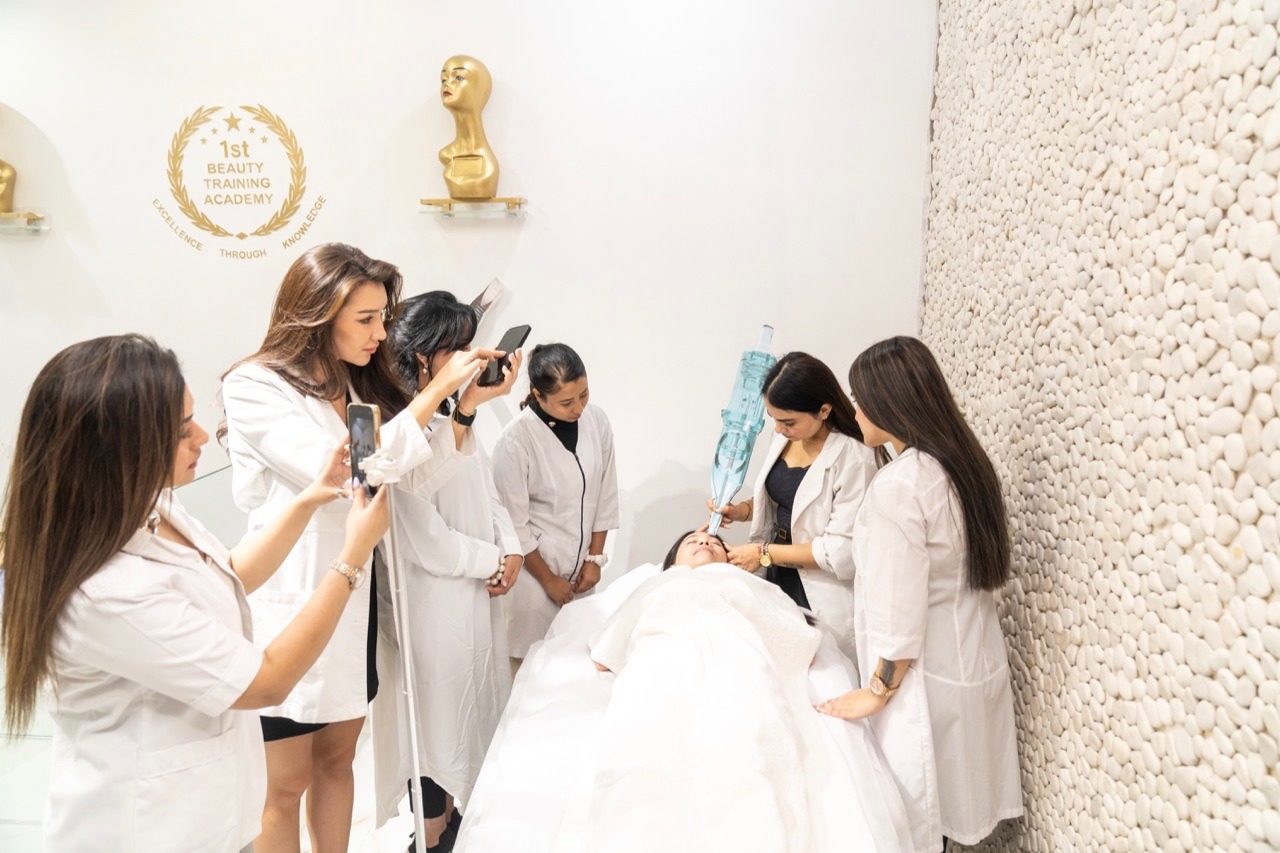
This is the part people picture when they imagine cosmetology school — cutting, coloring, styling, working on nails, sometimes basic skincare, depending on your program's scope. Early on, most of this happens on mannequins. As you progress, programs shift toward supervised work on real clients, which is where technique actually starts to click.
A well-run cosmetology program builds in enough client-facing hours that you're not walking into your practical exam — or your first real job — having only ever touched a mannequin head.
Business and client-facing skills, if the program covers them
The stronger cosmetologist programs also fold in something rarely mentioned in marketing materials: how to actually run a client relationship. Booking, consultations, managing expectations, upselling services appropriately, handling a client who's unhappy with a result. None of this shows up on your licensing exam, but it shows up in your first year of actual work, and programs that skip it leave graduates figuring it out the hard way.
How the pieces fit together
By the time you finish, a solid cosmetology course has moved you through theory, supervised practice, and — ideally — some exposure to the client-relationship side of the job. That combination is what your state board exam is built to test, and it's also what determines how ready you actually feel walking into your first salon job. If a program you're considering is thin on any one of these three areas, it's worth asking why before you enroll.