
Start with something the industry does not always state plainly: the distinction between semi-permanent and permanent makeup is not as clean as the terminology suggests. Both involve implanting pigment into the skin with a needle. Both are legally classified as tattooing in most jurisdictions. Neither is genuinely temporary.
What differs is depth, pigment behaviour, and longevity — and those differences do have real consequences for training and technique.
What the terms actually describe
"Permanent makeup" historically referred to traditional cosmetic tattooing: pigment placed deeper, using tattoo-style equipment and pigments formulated to persist. Older permanent eyeliner and brow work from the 1990s and 2000s often falls into this category, which is why some of it is still visible decades later, frequently having shifted blue or grey.
"Semi-permanent makeup" describes modern techniques that place pigment more superficially, in the upper dermis, using pigments engineered to break down over time. Results typically fade meaningfully over one to three years and require periodic refreshing.
The honest framing for clients: semi-permanent work fades but does not vanish. Residual pigment usually remains, and it affects what can be done later.
Technique differences that matter
Depth control. The core skill in semi-permanent work. Too shallow and pigment sheds during healing; too deep and it migrates, blurs, and shifts colour. The working window is roughly a fraction of a millimetre, which is why depth discipline dominates early training.
Tooling. Microblading uses a manual handheld blade to create hair-like incisions. Machine work — powder or ombré brows, nano brows, lip blush, eyeliner — uses a rotary or coil device with a single needle or cartridge. Traditional permanent makeup leaned more heavily on machine work at greater depth.
Pigment chemistry. Semi-permanent pigments are formulated to fragment and clear. Traditional tattoo inks are formulated to stay. Using the wrong product for the intended result is a common source of work that heals badly or refuses to fade as promised.
Colour longevity planning. Because semi-permanent pigment breaks down, artists must anticipate how a shade will look at month six and year two, not just on the day. Iron oxide and organic pigments fade along different paths.
What this means for your training
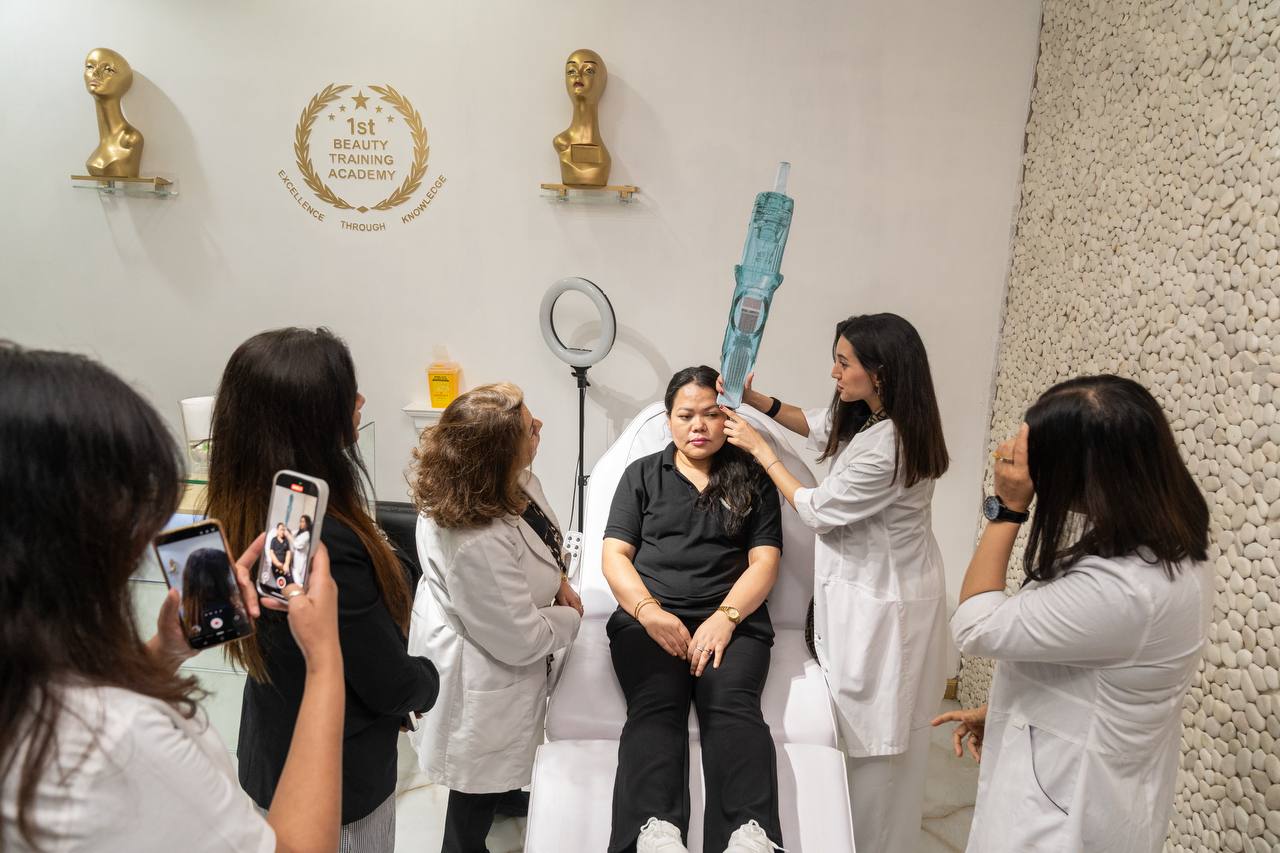
A semi permanent makeup course concentrates on modern brow, lip, and liner techniques, depth precision, colour theory for fading pigment, and retouch scheduling. A permanent make up course covering traditional methods may spend more time on deeper implantation, machine handling, and — increasingly — correcting or removing older work.
In practice most contemporary training is oriented toward semi-permanent technique, because that is what clients request. But correction work is a growing part of the field: clients arriving with faded, discoloured, or migrated permanent makeup from years ago. Understanding both approaches makes you useful to those clients rather than obliged to turn them away.
Removal and correction
Worth knowing regardless of which you practise. Saline removal, colour correction, and laser referral each have appropriate applications, and none of them fully reverse existing work. Training that covers assessment of previous tattooing — depth, pigment type, likelihood of successful correction — is more valuable than training that pretends every client arrives with untouched skin.
The client conversation
The most useful thing either training gives you is language for the consultation. Clients frequently believe semi-permanent means it disappears completely. It does not. Explaining fading realistically, setting retouch expectations, and documenting that conversation prevents the majority of disputes that arise a year later.